Sunday, July 12, 2009

Summer Shorts: Orphans of War


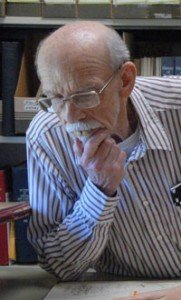
Snapshot: M/Sgt. James "Rudy" McElhannon with Joe and Jock, two war orphans who "adopted" him in Korea, 1950s.


By Pat Browning


Cuzzin Rudy's wife died about the same time as my husband died so we hung out together for months before I moved from California to Oklahoma. Rudy told me some hair-raising tales about his service in the Korean War, and I always meant to get a tape recorder and preserve some of those stories. I never did. I did make notes on a couple, putting my old highschool shorthand to good use, and this is one of them.


From my blog of May 29, 2006:


Picture this: A dark, moonless night in August 1950, with an American patrol at the observation point on a Korean hilltop. M/Sgt. James “Rudy” McElhannon looks down the valley and sees a flicker of light in a clump of bushes.

He keeps watching, keeps seeing that flicker of light. Finally he radios the platoon commander and is ordered to take two men down to check it out. They head down the valley to that clump of bushes.

In Cuzzin Rudy’s words:

"I found an opening in the bushes and jumped through it, had my rifle at the ready, took aim and almost in the blink of an eye I could have shot two little boys. They were sitting there cooking a pan of rice on a little fire. I don’t know what made me hesitate. All of a sudden it came to mind, these aren’t soldiers, these are babies.

"They jumped up scared, acting like they were going to run. I called out to them in some of the few Japanese words I knew. Most Koreans could understand Japanese. I hollered 'chotto matte' which means 'wait a minute.'

"The boys were filthy and dirty and all they had on was something that looked like a diaper. I walked over and kicked over their little can of rice. I wanted them to look to me. I gave them the chocolate bars I had in my pocket."

The patrol took the two boys back to the command post. The lieutenant had no objection to Rudy’s announcement that he wanted to keep them. Joe and Jock, he called them. Picking up the story in his words:

"When we were in a rest area or at the command post we lived in tents. Otherwise we just lived out on the ground. Throw a blanket on the ground, lie down and go to sleep. If it rained we’d put up a pup tent. Either that or sleep in a foxhole.

"We had guys who were pretty good with a needle and thread. Lot of times we’d get Korean laborers to help carry barbed wire, etc., and they usually had women around who could cut down uniforms to fit the boys. The biggest problem was shoes. We drew their feet on a piece of paper, guys sent it back to their wives or mothers, they’d go to town and buy little combat boots. The boys ended up
with 2 or 3 pairs of boots.

"We shared our rations with them. They got fat. Joe had the prettiest set of teeth I ever saw in a kid’s mouth, they were perfect. He had a little old smile that was just as pretty as could
be.

"They didn’t know what had happened to their parents. Running
from the fighting, from villages in South Korea. Refugees would crowd the roads and we couldn’t get through. We had as much trouble with refugees as with the enemy .

"I would go out on patrols, build a bridge, blow up something
or fill up a hole in the road, put in mines, take out mines, fight the enemy just like the infantry does, whatever comes up. I’d leave the boys with the first sergeant at the command post. They’d always be waiting when I came back.

"They washed my clothes. If they knew I was coming back they’d have hot water for me to shave, unfold my cot and have my bed ready.They took better care of me than I did of them. We had four boys at one time. The other companies also had some. The American soldier has a soft spot in his heart for little kids."

Then came new orders. It wouldn’t be possible to take children where the soldiers were going. Cuzzin Rudy was tapped to escort the battalion’s 16 orphans south. He put them in a truck, with two men in back as security and one in front, and delivered them to a Presbyterian minister in Taegu.

Just one of many stories that come out of a war …

Saturday, July 11, 2009

Summer Shorts: Death On A Sandbar


Snapshot of Sgt. James (Rudy) McElhannon, Korea 1950
(with apologies for the quality of the print)


By Pat Browning

My Cuzzin Rudy, the late James (Rudy) McElhannon, didn't say much about World War II but he never stopped talking about Korea. Korea haunted him until the day he died.
The McElhannons descend from Ulster men who came to this country just before the Revolutionary War, and Prussians who left Europe about the time of the Thirty Years War. Something in that DNA, and a whole lot of luck, got Rudy through some perilous times.

By the time he was 17 he was aboard the light cruiser USS Cleveland headed for the invasion of North Africa. World War II was in full roar, and after North Africa the ship went on to the Pacific. Its itinerary was a road map of that theater ... Guadalcanal, New Georgia, Bougainville, Truk, the Solomons, the Marianas, Corregidor, Subic Bay, Manila, Okinawa, Tokyo Bay ...

Rudy was a Chief Petty Officer when he left the Navy in 1946. In 1949 he joined the Army as a Sergeant First Class. He was, he said, "an old man of 25" when he got to Korea. He sometimes quoted Ernie Pyle, the famed World War II correspondent, who said that a combat soldier's view of war is 200 yards wide and 1000 yards long.

Cuzzin Rudy was much on my mind during the July 4th holiday, so I'm sharing a couple of blogs I wrote about him in 2006. Call this one Death On A Sandbar. Tomorrow, Sunday, will be Orphans of War.

****
From my blog of May 28, 2006 - an excerpt of a story I wrote for The Hanford (California) Sentinel in 2003.
QUOTE:
Seared into McElhannon's memory is the view of a sandbar in the Naktong River, white sand glistening in the early morning sunlight. Getting across the river was part of an operation known as the Pusan Perimeter Breakout, timed to coincide with Gen Douglas MacArthur's landing at In'Chon ...
The platoon had been told that the crossing would be a piece of cake.
McElhannon swam out the night before to cut a double-apron barbed wire fence the North Koreans had stretched the length of the sandbar. He marked the best landing spots on the other side with flags. But the crossing, scheduled for 2 a.m., began well after daylight because the boats were late arriving. As McElhannon tells it:
"When we got to the cut I'd made in the barbed wire, all hell broke loose -- artillery, mortars, machine gun fire. Men were falling, yelling, screaming, trying to dig foxholes in the sand."
McElhannon started lining up boats to get the river crossing underway. Then came one of those bizarre incidents that beggar belief.
From the sandbar, McElhannon watched a boat take off, with men on the sides paddling while a man in the back steered, his head bent over, looking out from under the rim of his steel helmet. Suddenly the boat began to wander.
McElhannon swam out and pulled the boat back up on the sandbar, yelling for help. The men with the paddles had taken cover in the bottom of the boat. The man in the back was dead. A bullet had gone through the top of his helmet and down through his head, coming out between his neck and shoulder.
"I covered him with my poncho," McElhannon says, "and then a mortar shell landed and took his right leg off. I said, 'Doesn't look like they're through with you yet, buddy,' and I put his leg under the poncho with him.
Finally two guys in a litter jeep came along and picked him up. As they got up onto the levee, an artillery shell hit the jeep and blew it to pieces. All I could do was just stand there and watch."
That day, 120 men died on a sandbar roughly 100 yards wide and 250 yards long.
END QUOTE
Some stats: South Korea is slightly larger than the state of Indiana. North Korea is slightly smaller than the state of Mississippi. That's not a lot of ground, but the casualty figures are staggering.
Americans: 37,000 dead; 103,000 wounded; about 8,100 still missing.
North Korean and Chinese military: 1-1/2 to 2 million dead; possibly 1 million North Korean civilians killed.
United Nations military: almost 500,000 killed, wounded and missing; about 1 million South Koreans killed.
Total human casualties: 4-1/2 million people.
James Brady, who was a Marine in Korea, has written about his experience in a novel, THE MARINES OF AUTUMN, and a memoir, THE COLDEST WAR. Both are good reading.
****
Tomorrow: Orphans of War

Friday, July 10, 2009

Early Chris LeDoux

by Jean Henry-Mead

Long before a Garth Brook’s song elevated Chris LeDoux to the ranks of country stardom, the young bronc rider was busy raising kids, horses, Columbia sheep and hay on his 500-acre ranch near Kaycee, Wyoming. He was then best known for his 1976 world championship rodeo title and his songs about rodeo life.

The easy-smiling, laid-back cowboy did things his own way because, next to his family, freedom was his most valued asset. It was also the reason he left rodeo in 1980 to concentrate on his own record label, instead of being "owned by a big company."

At the time he said, "I don’t know what makes a guy want to write songs and sing, but if you’ve got a message, you want to get it across. When I come up with an idea about the way I feel, I can really state it strongly in a song."

The shy guitar picker felt strongly about "family freedom and the West" as well as "cowboy ways." He was just as adamant about his dislike of farm machinery and refused to be photographed on his own tractor. By 1981, his feelings had been transformed into more than fifty songs, which he wrote, recorded, and sold — more than 250,000 albums and tapes — from the back of his pickup truck while performing as a bareback rider. LeDoux and his father Al, a retired air force major, had formed their own recording company, American Cowboy Songs, in 1972, and recorded periodically in Nashville on a boot lace budget.

Chris began riding in junior rodeos while thirteen and living in Denison, Texas. The air force brat, eldest of three children, had previously lived in France, Mississippi, New York, Texas, and Pennsylvania, before moving to Cheyenne, Wyoming, while a high school sophomore. During the time he lived in the southern states, he acquired an accent and love of rodeo, which led him to quit college to take on the circuit full-time.

Majoring in art, physical education and rodeo at Casper and Sheridan community colleges, he received a scholarship to Eastern New Mexico University at Portales in 1969. After one semester, he performed in a rodeo at the Denver Stock Show. He didn’t win any money, but he went on to Fort Worth where he won $400 as a bareback rider. The win changed the course of his life. He decided to quit college in his third year and ride the circuit full-time.

While performing in high school and college rodeo, he rode bulls and saddle broncs as well as roping calves, but he was best on bareback broncs. "I had to give everything I had to one event if I wanted to excel," he said. And excel he did. He won the world championship bareback title in December 1976 at the National Rodeo Finals in Oklahoma City, the sport’s "super bowl." The win, he said, made up for all the injuries and lean days on the road.

"I can remember sittin’ in a café when I first started in rodeo, and waitin’ until somebody got done so I could finish what they left," he said, laughing. "You get to where you kind of like it, and it’s a habit that’s hard to break. I still find myself sittin’ in a café, like a pizza parlor, and thinkin’ ‘Doggone, they sure left a lot of food.’"

When the prize money ran out, he was forced — like other cowboys on the circuit — to "rough it" between rodeos. "Sleepin’ in the truck wasn’t so bad. Shoot, I kind of liked that, myself. And takin’ a bath in the creek. That’s the stuff that really made it worthwhile. Anybody can stay in a motel."

The expenses were the worst part. "I remember when I first started. I thought, ‘Boy, if I just had enough to pay my entry fees and buy a hamburger once in a while, I don’t care whether I win any money. I just wanted to get on them buckin’ horses and go.’ But when you get a little older, you think, ‘I’d like to make a little money and stick it away or buy a place — or win the world championship.’"

Entry fees were $150-$200 per event in those days and cowboys looked forward to sharing in the prize money, which averaged between $2,500 and $4,000. But the odds of winning are high. "In my event, at a rodeo like Houston, there might be ninety bareback riders that you’re competin’ with. You’ll probably get three horses and you have to draw a good buckin’ horse. That’s mighty tough. The odds of drawing a good one is probably eighty percent against you. If you’re lucky enough to draw a good horse, you still have to ride him, then the next ones. So it’s probably eighty percent luck and twenty percent skill."

The young, six-foot, 170-pound cowboy averaged 80 rodeos a year. "I really didn’t go that hard," he said, "although a couple of years I did. Some guys work 125 to 130 rodeos a year. They’re just goin’ all the time. Rodeo cowboys usually keep goin’ until they’re crippled — injured by animals — run out of money for entry fees and traveling expenses, quit or get killed in the arena. The camaraderie among them is unlike any other sport."

"We loaned each other money to keep goin’ and we yelled for each other in the arena. It’s not like football or basketball where the guys are competin’ against each other. You’re competin’ against the animals and the elements. And you hope your buddies will win so you don’t have to loan them any money."

LeDoux had second thoughts about his rodeo career during his second season. "I thought it was the worst mistake I ever made ‘cause I only won $250 all summer. And then I got crippled. I had a horse step on me while performing and [my foot] was messed up for a while."

The handsome bronc rider was fortunate not to have sustained any broken bones. His injuries were confined to separated joints: knees, collarbone and an elbow. His longest period of recuperation was from February until June of 1975, when he injured his knee. "It was a terrible injury," he said, and years later, it still "wasn’t right." I had to finally figure out a way to tape it so that it held together."

Before his world championship ride, he and his wife rigged a harness to hold his collarbone in place. Shrugging, he said, "Shoot, every time you get on an animal, you take your life in your hands."

Some of LeDoux’s predicaments were far more humorous than life threatening. He recalls a horse that "mashed" his new Western hat in the arena, and the time he performed a race where he sat in a "scoop shovel" pulled by a rope that was dallied to the saddle horn of a horse running a timed race around some barrels. "My partner and I won the race, and I threw my hat into the air and bent to pick it up. Everyone started laughin’ because I had split the back end of my pants out, and I wasn’t wearing shorts."

The cowboy married a girl in 1972 in the minuscule town of Kaycee in east-central Wyoming. Peggy Rhoads had never been out of the state when she became Mrs.Christopher LeDoux, but she found herself on the rodeo circuit, living like a gypsy. Her husband intended to leave her home that winter and return whenever he could, but Peggy attended a Denver rodeo, and left to travel with him. He had $15 in his jeans when they left Denver for Amarillo, where he had won $800, which got them as far as Fort Worth, Houston and San Antonio. There he won a little more. When his bank roll ran out, he borrowed enough to get them to San Diego.

"Tires were so bald on the truck that the air was showin’ through, and I had to drive fifty miles an hour all the way out there because the vibration was so bad."

Fortunately, he won the bareback competition and they moved on to Phoenix, where they bought new tires, paid his entry fees, and stayed in a motel. Then they were broke.

Peggy left the circuit to give birth separately to a daughter and three sons. Her husband went home during his off-time, whether from injury or fatigue. While he was home, LeDoux built a log house in "downtown" Kaycee, completed in five years. He also considered his chances of becoming a recording artist in his spare time. He had been composing songs with guitar since high school as well as dabbling in art. In 1972, he and two friends recorded some of his songs on a four-track tape recorder in a friend’s basement in Sheridan, Wyoming. LeDoux then sent the reel-to-reel tape to his father Al, who had retired from the military, and was living in Mt. Juliet, Tennessee, near Nashville.

"There was a lack of rodeo songs," he said. "There were songs about truck drivers, love, barrooms and every other doggone thing, so I figured that with all the rodeo fans and cowboys out there, I’d give them some rodeo songs. And it worked."

LeDoux’s father at first recorded the tapes, one at a time, on a small device in his home. They were distributed at rodeos by his son from the back of his pickup truck. Later, they rented a recording studio in Nashville and hired musicians to play backup. "They were so good that you just had to sing the song to them once and they got it," he said smiling. "It’s amazing. Sometimes it didn’t come out the way you wanted, but it was good." His albums took three or four sessions of three hours each to record without rehearsal time — to save money.

By 1982, country music fans had purchased over a quarter million copies of his self-published recordings. His renditions of songs such as: "A Cowboy Like Me," "Too Tough to Die," and "What More Could a Cowboy Need" sold surprisingly well in stores and music outlets, and were broadcast on country music stations across the country. Radio station KSOP in Salt Lake City promoted the young "Roy Rogers" since his early recording days, and he staged concerts in the area on a regular basis. He also appeared twice on German TV in Munich, and earned himself a fan club in Iowa.

His father, serving as his business manager, negotiated with several large recording companies and found that his son’s valued freedom would be severely impaired if he signed with any of them. "Shoot," the cowboy said, "they would own me. They’d tell me which songs to sing and where to appear. That would be terrible."

Although he continued to write songs about his rodeo days, LeDoux said during his early thirties, "I hope I’ve got enough sense to never go back to it. I might consider it if rodeoing started paying anywhere near as much as other sports." He decided to give it up in 1980, while he was "down behind the chutes with this big snatchin’ horse — that’s one that really jerks on you like a hobo grabs a freight train as it goes by. I was sittin’ there with both knees taped and my elbow and collarbone. And I thought, ‘Doggone, what am I doin’ here?’ I just wanted to get in the truck and go home . . . When I finally got there, I threw my glove away and tossed my riggin’ bag in the cellar. I haven’t been back since."

Still struggling to make it into the ranks of well-known country music stars, LeDoux went on tour with Garth Brooks, and Brooks wrote, "I’m Too Young to Feel so Damn Old," which mentions, "listenin’ to an old Chris LeDoux tape. . ." The rest, as they say, is country music history.

(Excerpted from my book, Westerners.)

Thursday, July 9, 2009

Everything I Know About Writing, I Learned From My Dogs

By Beth Terrell

I originally wrote this post as a guest blogger for "Working Stiffs," but I decided to repeat it here because I wanted to share it with you, and I don't think the two groups share many of the same followers. (It's a great blog, though, if you want to check it out.)

There is an old bumper sticker floating around that says, “Dog is my co-pilot.” As a writer, I could say “Dog is my muse,” or “Dog is my inspiration.” My husband and I share our home with two papillons: Luca (a.k.a., His Lordship of Eternal Cuteness, Light of a Thousand Suns) and our new puppy, Willow (a.k.a., She Who Seeks to Topple the Throne). While they never remind me to use the active voice whenever possible or to write 1,000 words a day (4,000, if I want to keep up with the tireless Joe Konrath), I have learned much about writing from them. Here are just a few of the lessons my dogs have taught me.

Love unconditionally. At first glance, this seems like a lesson for living, rather than a lesson for writing, but think about that manuscript you’re working on. Parts of it are polished and elegant, while others are awkward and rough. You give birth to a first draft that seems like the most beautiful baby in the world. Then you realize it’s a red, wrinkled, colicky creature that leaks at both ends and squalls like an air raid siren. You love it anyway. It’s that unconditional love that allows you to shepherd your little darling through the gangly, acne-pocked stage and mold it into the magnum opus you always knew it could be.

Take the time to do things you enjoy. Even a work-driven border collie occasionally takes a few minutes to gnaw on a bone or roll in a rotting squirrel carcass. We writers should do the same. Well, okay, not the rotting squirrel carcass. I lean more toward a Hugh Jackman movie and a box of Godiva chocolates. But you get the point: balancing work and play is important.

Savor every moment. We writers spend a lot of time in our own heads. I sometimes get so caught up in plans for the future (If only I could afford to write full time…Just wait until that hungry young agent comes to his/her senses and decides to offer me representation) that I forget to appreciate the wonder of creating worlds and people on paper. When Luca is sniffing the neighbor’s mailbox, he isn’t thinking about what he’s going to do when he gets home or which halter he’ll wear to his clicker class. He’s completely immersed in the messages left him by that sweet little terrier mix down the street. He’s living in the now. It’s easy to focus so intently on the goal that we forget to enjoy the journey.

Feel everything intensely
. Can any creature express such utter happiness (“ahhhh, belly rub”) or such utter misery (“Crate? What do you mean, crate?”) as a puppy? It’s easy to fall back on facile descriptions of emotion, but a writer who can convey genuine emotion has a rare gift indeed. Watching the sincere emotion of my dogs reminds me to strive to be genuine in my writing.

Be gregarious. Luca loves people. On our walks, when he sees a stranger in the distance, he wags his whole body as if to say, “Look, Ma. Somebody over there wants to meet me!” His joyous greetings elicit smiles and outstretched hands. As a shy writer, I watch him work the crowd and realize that folks really aren’t so scary. All I have to do is show an honest desire to get to know them. (Of course, just to hedge my bets, I wrote Luca into my second book so he could accompany me to signings and attract the crowd.)

Don’t pee on the carpet. Okay. I already knew that one, but let’s think about it for a minute. Couldn’t we metaphorically equate our dogs’ soiling the carpet with the kind of self-sabotaging behavior some authors engage in (procrastination, missing deadlines, badgering his or her agent at all hours, boasting about his or her accomplishments ad nauseum, etc.)? A dog who can’t control his bladder misses out on opportunities to visit public places and other people’s homes, while a well-mannered, housebroken pup may go to the dog park, to a friend’s house, on puppy play dates, and outdoor craft festivals. Likewise, a writer who can’t control his or her behavior may alienate agents, editors, and potential fans. I know of at least one well-known author whose obnoxious behavior at a signing ensured he would never be invited back to the bookstore that held the event. On the other hand, readers will often buy books by authors who have been kind to them, even if those books might not ordinarily be in their sphere of interest.

And finally: Carpe diem, because no one can seize the day quite like a dog, especially one with literary aspirations.

Wednesday, July 8, 2009

Authors and Musicians

By Mark W. Danielson

Authors and musicians share a variety of tribulations. On the one hand, both groups possess an innate creative urge, which for most part, extends beyond any profitable merits. On the other, most musicians and authors will always struggle for notoriety in these popularity-based businesses. Sadly, neither group has much say in how their work can get noticed.

In a book store’s defense, authors must realize that managers base what books will be carried on their sell ability, thus name recognition is essential. Furthermore, when publishers don’t offer returns, there is no incentive for book stores to stock unknown authors’ works.

Not surprisingly, this same bias applies to musicians where radio station managers determine what songs receive air play. In spite of their nauseous repetition, disc jockeys must constantly replay the same songs in order to appease their station's sponsors. Unfortunately, we all lose where there is no musical or reading variety.

What’s interesting is seeing how rock icons like Bruce Springsteen, Tom Petty, and John Fogerty are facing these same problems. Although all three have released interesting albums in the last two years, few receive airplay among conglomerate radio stations. Springsteen's lyrics in his song Radio Nowhere echo his frustration: “I was spinin’ round a dead dial, just another lost number in a file, dancin’ down a dark hole, just searchin’ for a world with some soul. This is radio nowhere, is anybody alive out there?” Imagine singers like Bruce, Tom, or John finding themselves suddenly too old or outdated to compete with The Jonas Brothers, Lady Gaga, and Kid Rock. Then again, authors like Tom Wolfe would probably face similar difficulties in getting published in today’s market. Whether we’re talking about books or music, we have minimal input in what’s available to us.

This means that consumers must step up to preserve their freedom of choice. Readers must support their independent bookstores before they’re all gone, and music lovers must support PBS and satellite radio. All over America, independent book and music stores are closing because of a down economy. Add to that the Kindle electronic readers and IPod downloads and it's a wonder how any of them can stay in business. E-book sales are up 150% and climbing because people prefer downloading to strolling a bookstore’s aisles. Some may call this progress, but I’m sure we’ll be sorry when book and music stores are gone.

Although some say published novels will soon become relics of the past, I remain cautiously optimistic, for many people still prefer holding a book. Printed books can be loaned, read in direct sunlight, and their pages flipped and marked to their owner’s desire. They do not depend upon external power, and they can dry after being dropped in water. And while these electronic readers provide endless no-bulk libraries, I’m not convinced that Kindle’s advantages outweigh its disadvantages. So even if Amazon’s dream of cataloging every book ever printed comes to fruition, there will still be a demand for real books. The only difference is these books will be printed on demand, so the only thing sold in book stores will be really expensive coffee, Kindle batteries, and IPod earphones.

Ultimately, writers and musicians will continue producing because they love doing what they do. Recall that Stephen King has retired more than once, but he’s still writing today. The same can holds true for Springsteen, Petty, and Fogerty because performing is in their blood. So, perhaps authors and musicians should write and/or perform for the love of it, remembering that having a small following is as important as a large one. But most of all, if your creation has brought fulfillment to yourself and your fans, then your efforts have been worthy.

Tuesday, July 7, 2009

Memories of High Flight

Oh! I have slipped the surly bonds of Earth
And danced the skies on laughter-silvered wings;
Sunward I’ve climbed, and joined the tumbling mirth
of sun-split clouds, — and done a hundred things
You have not dreamed of—wheeled and soared and swung
High in the sunlit silence. Hov’ring there,
I’ve chased the shouting wind along, and flung
My eager craft through footless halls of air....

Up, up the long, delirious, burning blue
I’ve topped the wind-swept heights with easy grace
Where never lark nor even eagle flew—
And, while with silent lifting mind I’ve trod
The high untrespassed sanctity of space,
Put out my hand, and touched the face of God.


The poem “High Flight” by RCAF Pilot Officer John Gillespie Magee, Jr. is a familiar one to those of us old enough to remember when TV stations signed off at midnight. The poem was recited as jet fighters swirled through the sky. But it goes back even further for me. I carried a copy of it when I was an Aviation Cadet in the Army Air Forces during the latter part of World War II.

I can’t remember exactly where I got it, though I think it was in something my mother sent me. I had dreamed of flying since early childhood, and that poem was a real inspiration. I never realized my dream, as the need for pilots became less and less with our success in the air war. I was discharged as an Aviation Cadet about three months after the war ended.

The poem always fascinated me, though, especially after it began showing up on nightly TV. When I ran a trade association back in the 70s and 80s, I used the movie version with the Air Force fighters at conventions.

I hadn’t thought of “High Flight” in a long time until I read Pat Browning’s weekend posts about the downing of a B-26 in Wales in 1943. I looked up the poem in Wikipedia and learned a lot about the young poet pilot and how his verse has spread over the years.

John Gillespie Magee, Jr. was born in Shanghai, China, in 1922, the son of an American Episcopal priest and a British mother. He attended school in England and the U.S., winning Rugby School’s Poetry Prize in 1938. He earned a scholarship to Yale University in July of 1940 but spurned it to enlist in the Royal Canadian Air Force. After receiving his wings in July 1941, he shipped out to a unit in RAF Llandow, Wales to train in the Supermarine Spitfire.

Assigned to the 412th Fighter Squadron at RAF Digby, he flew fighter sweeps over France and air defense missions over England against the German Lufwaffe. On Sept. 3, 1941, while on a high altitude test flight of a newer model Spitfire V, he received the inspiration “to touch the face of God.” He composed the verse soon after landing and wrote it on the back of a letter to his parents.

A few months later, on Dec. 11, 1941, three days after the U.S. entered the war, Magee died when his Spitfire collided with a training plane in clouds while descending near his base. At the age of 19, he was buried at Holy Cross, Scopwick Cemetery in Lincolnshire, England.

According to Wikipedia, “High Flight” is the official poem of the Royal Canadian Air Force and the Royal Air Force, and it is required to be recited from memory by first year cadets at the U.S. Air Force Academy. Passages from the poem have been quoted in many books. John Denver adapted it and put it to music in his 1983 album It’s About Time. Parts of it have been used in movies and a TV series, and President Reagan quoted from the poem in a speech following the Challenger disaster.

I still get goose bumps reading the vivid imagery in the verse.

Sunday, July 5, 2009

Summer Shorts: A Mountain in Wales


A propeller from the "Lil Lass" memorializes the crash of a B-26 on Carn Llidi during World War II. Shirley Wetzel and Gwen Scoggins traveled to Wales for a memorial ceremony in 2005.

By Pat Browning

This is really Shirley Wetzel’s story. She writes:

“In late summer, 2003, while skimming through my hometown newspaper, the Comanche (Texas) Chief, I was surprised to see a name I recognized. A man in England, I read, had written in search of relatives of 2nd Lt. Hulbert H. Robertson, who served in the Army Air Corps in World War II. I knew that name well. Hulbert was my mother’s first husband, father of my half-sister Gwen. He died on June 4, 1943, when his B-26 Marauder crashed into a Welsh hillside. He was buried in the American Cemetery near Cambridge, England.

"Gwen was not quite two years old when her father died, too young to remember him. My dad raised her and loved her as his own, but from early on I knew that my big sister and I had different biological fathers. Her daddy was the smiling young soldier whose picture hung on the parlor wall of his parents’ old dog trot cabin in the country near Comanche.”

The “man in England” turned out to be Steve Jones, a firefighter and aviation history buff living in Port Talbot, Wales. He had spent 10 years researching World War II military aircraft crashes in southern Wales, and had copies of the accident report and other official documents that included details of the crash. He invited Shirley and Gwen to visit him, so on March 15, 2004 they flew from Houston to London, and Steve was there to meet them.

In an e-mail, Shirley told me of meeting people who remembered the crash:

“(The Lil Lass) was in heavy fog and never saw it coming -- we talked to a couple of people who'd been children at the time and remembered hearing the plane coming -- "my father heard it and said ‘that plane will never make it over the mountain’-- then there was a crash, and silence. All the farmers around ran up the mountain (a hill, really, 600 ft.) to see if they could help, but there was nothing they could do. They took the bodies down to St. Davids Cathedral as a sign of respect while waiting for the Americans to come for them.

"My mother, who never knew much more than that his plane crashed in Wales, has been so thrilled to get all this information. She had always worried that he'd been all alone high in the mountains, but that wasn't the case at all. We brought back a stone, some dirt and a few pieces of metal that's still on the hillside so she can put them under a marker in his family cemetery.”

Shirley wrote an excellent account of her visit, calling it “A Mountain in Wales.” I posted it on my blog (Morning’s At Noon) in April this year, and not a day goes by without someone from Europe (mostly the UK) landing on her story. A couple of days ago I had a visitor from Bratislava. Now there’s a name to conjure with.

Shirley’s story, with several photos, can be seen on my blog at
http://tinyurl.com/mneqjm.

Here are some moving excerpts from her visit to the Cambridge American Cemetery,where many American soldiers are buried, and to the British Museum.


***
… Arthur took us to the Memorial building, which is separated into a large museum room and a small devotional chapel. A glass wall overlooking the cemetery contains stained-glass replicas of the seals of all the states and U.S. territories represented in the cemetery. On the opposite wall are large maps depicting the Atlantic and Pacific theaters.

A magnificent mosaic by Francis Scott Bradford of Connecticut is the most striking part of the building. On the wall above the altar, the Archangel trumpets the arrival of the Resurrection and the Last Judgment. The mural continues across the entire ceiling, with depictions of World War II aircraft flying into the arms of angels. An inscription runs around the edges:

“In proud and grateful memory of those men of the United States Army Air Force Who from these friendly skies flew their final flight and met their God. They knew not the hour the day nor the manner of their passing. When far from home they were called to join that heroic band of airmen who had gone before. May they rest in peace.”

***
… the British Museum … our final stop. As we walked in, I noticed a carved panel on the front wall, a memorial to museum employees who “went from this museum and fought and fell in the war 1914-1918.” Ten names were listed. At the bottom, under the dates 1939-1945, four more names had been added.

In between was a stanza from a poem by Laurence Binyon, “The Fallen.” It captured perfectly the purpose of our journey:

“They shall grow not old/
As we that are left grow old/
Age shall not weary them/
Nor the years condemn/
At the going down of the sun/
And in the morning/
We will remember them”
***

Many thanks to Shirley Wetzel for sharing her stories, which remind us of the great debt we owe to those who paid for our freedoms.